Why Hand Hygiene Still Matters More Than Ever
Every day, our hands come into contact with countless surfaces, from mobile phones and keyboards to shopping trolleys, door handles and shared workspaces. While many people associate hand hygiene with the COVID-19 pandemic, the reality is that proper hand hygiene has always been one of the most effective ways to prevent illness.
Despite major advances in medicine and healthcare, infections continue to spread through simple daily contact. Good hand hygiene remains a frontline defence against viruses, bacteria and other harmful germs that can easily move from surfaces into our bodies.
World Hand Hygiene Day serves as an important reminder that protecting your health often begins with simple everyday habits.
Why Hand Hygiene Is So Important
Our hands act as a bridge between the environment and our bodies. Throughout the day we touch numerous objects and surfaces, often without thinking. We also frequently touch our eyes, nose and mouth, creating an easy pathway for germs to enter the body.
Proper hand hygiene can help reduce the spread of many common illnesses, including:
• The common cold
• Influenza
• Gastrointestinal infections
• Foodborne illnesses
• Viral infections
• Certain bacterial infections
Because germs are invisible to the naked eye, it is easy to underestimate how easily they spread.
Good hand hygiene protects not only your own health but also the wellbeing of those around you, particularly young children, older adults and people with weakened immune systems.
Soap and Water vs Hand Sanitiser
One of the most common questions people ask is whether hand sanitiser is as effective as washing with soap and water.
The answer depends on the situation.
When Soap and Water Is Best
Soap and water remain the gold standard for cleaning hands, particularly when hands are visibly dirty or greasy.
Soap works by loosening dirt, oils and germs from the skin so that they can be rinsed away effectively.
Soap and water are particularly important:
• Before preparing or eating food
• After using the bathroom
• After coughing or sneezing
• After handling waste or rubbish
• After caring for someone who is ill
• After touching animals or pet waste
• When hands are visibly dirty
Regular handwashing with soap remains one of the most reliable methods of reducing exposure to harmful germs.
When Hand Sanitiser Works Well
Alcohol-based hand sanitisers containing at least 60% alcohol can be highly effective when soap and water are not available.
Hand sanitiser can be particularly useful:
• While travelling
• At work or school
• After touching public surfaces
• During shopping or commuting
• In public or healthcare environments
However, sanitiser does not remove dirt or certain chemicals and may be less effective when hands are visibly soiled.
Rather than replacing handwashing entirely, sanitiser should be viewed as an additional tool for maintaining proper hygiene.
Common Handwashing Mistakes
Many people wash their hands regularly but may not be doing so effectively.
Simple mistakes can reduce the effectiveness of handwashing and allow germs to remain on the skin.
Washing Too Quickly
A quick rinse under running water is usually not enough.
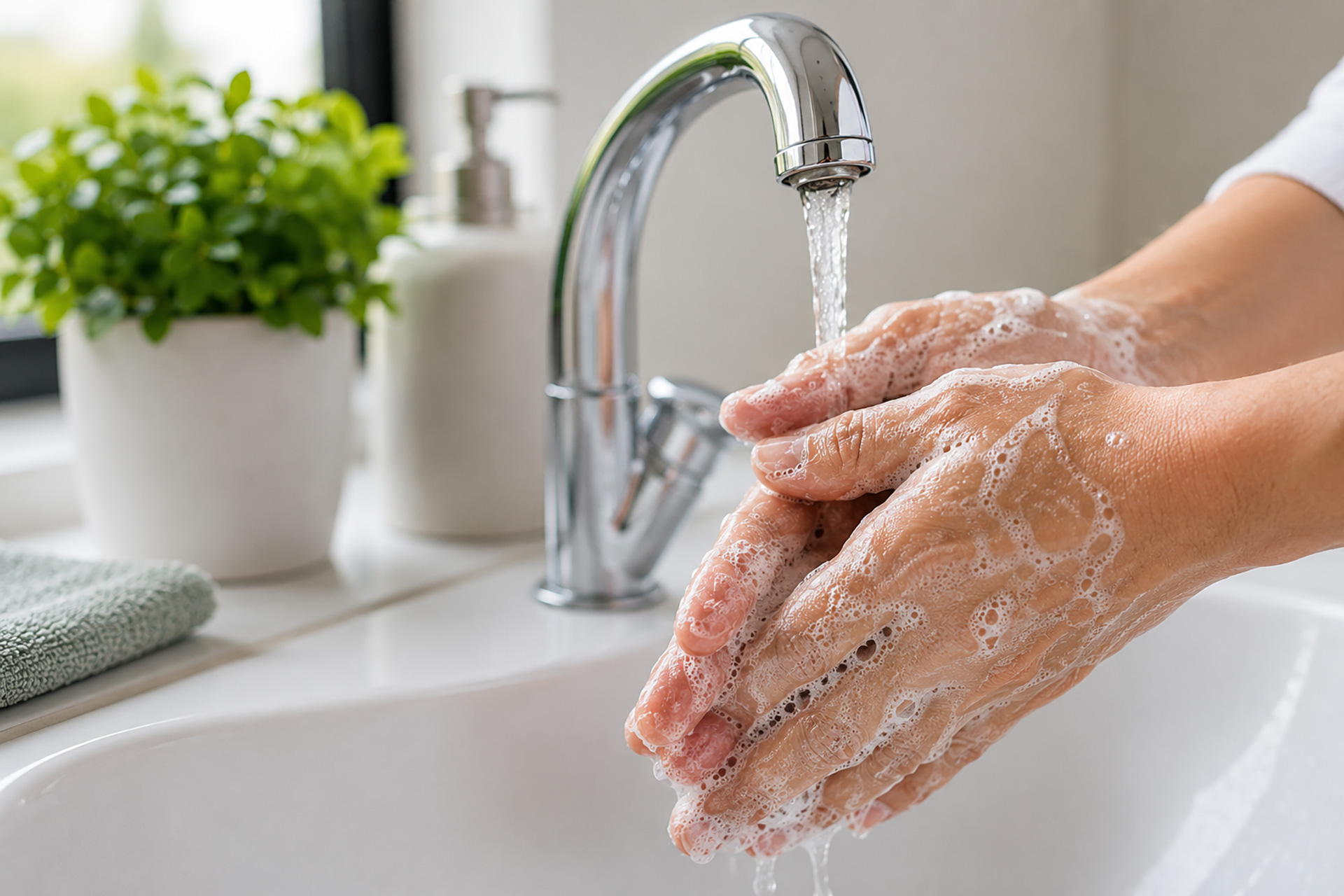
Effective handwashing should last around 20 seconds to allow soap enough time to break down germs and contamination.
A useful guide is to wash for the length of singing “Happy Birthday” twice.
Missing Key Areas
People often forget to wash:
• Fingertips
• Between fingers
• Thumbs
• Under nails
• Backs of hands
• Wrists
These areas commonly harbour bacteria and viruses.
Not Drying Properly
Wet hands transfer germs more easily than dry hands.
After washing, dry hands thoroughly using a clean towel or air dryer.
Proper drying is an important but often overlooked part of hand hygiene.
Relying Only on Gloves
Gloves can sometimes create a false sense of security.
Germs may still spread through contaminated gloves or during glove removal. Hand hygiene remains essential even when gloves are used.
Hand Hygiene in Everyday Life
Good hand hygiene is not limited to hospitals or healthcare settings. It should form part of everyday life at home, school and work.
At Home
Households can reduce the spread of illness by encouraging regular handwashing before meals and after returning home.
Parents play an important role in helping children develop healthy hygiene habits from an early age.
Simple routines often become lifelong behaviours.
At Work
Offices and workplaces contain many shared surfaces.
Phones, keyboards, printers and communal kitchens may all become sources of germ transmission.
Employees who practise good hygiene habits may help reduce workplace illness and absenteeism.
In Healthcare Settings
Healthcare professionals rely heavily on strict hand hygiene practices to protect both patients and staff.
This is why hand hygiene remains one of the foundations of infection prevention in clinics and hospitals worldwide.
The Link Between Hand Hygiene and Seasonal Illness
As temperatures become cooler and seasonal illnesses increase, hand hygiene becomes even more important.
Respiratory infections tend to spread more easily during colder months as people spend more time indoors and in close contact with others.
Combined with healthy lifestyle habits such as balanced nutrition, quality sleep and appropriate medical care, good hygiene can help support overall wellbeing and reduce illness transmission.
When to Seek Medical Advice
While many common illnesses improve with supportive care and rest, persistent or worsening symptoms should not be ignored.
Seek medical advice if you experience:
• Persistent fever
• Difficulty breathing
• Severe sore throat
• Signs of dehydration
• Symptoms lasting longer than expected
• Worsening illness despite home care
Telemedicine offers a convenient way to consult a healthcare professional without unnecessary travel or exposure to illness in waiting rooms.
Small Habit, Big Impact
Hand hygiene may seem like a simple habit, but its impact is significant.
In a world where infections can spread quickly through everyday interactions, washing your hands properly remains one of the easiest and most effective ways to protect yourself and those around you.
Often, it is the smallest daily habits that make the greatest difference to long-term health.
Speak to a Healthcare Professional
If you are feeling unwell or need medical guidance, TruMD makes it easier to connect with qualified healthcare professionals from the comfort of your home.
Book your consultation online and take the next step toward better health today.