Burns at Home: Common Causes and When You Should Seek Medical Advice
Burns are among the most common household injuries and can happen in seconds. From hot drinks and cooking accidents to electrical appliances and heated surfaces, burns can affect anyone and often occur during routine daily activities. While many burns are mild and can be managed at home, some require urgent medical attention. Knowing how to respond quickly and correctly can help reduce pain, limit skin damage and prevent complications. During Burns Awareness Month, it is worth taking time to understand common burn risks, appropriate first aid and when professional medical care is necessary.
Common Causes of Burns at Home
Burn injuries happen more often than many people realise. The home contains several potential hazards that may lead to burns, particularly in kitchens and bathrooms. Common causes include: • Hot liquids such as tea, coffee and boiling water • Cooking accidents involving oil or steam • Hot stovetops and ovens • Electrical appliances and exposed wiring • Heated hair tools such as straighteners and curling irons • Fireplaces and heaters • Chemicals and cleaning products • Excessive sun exposure Children are particularly vulnerable due to their curiosity and limited understanding of danger, while older adults may face increased risk due to reduced mobility or slower reaction times.
Understanding Different Types of Burns
Not all burns are the same. The severity of a burn depends on how deeply the skin has been damaged.
First-Degree Burns
First-degree burns affect only the outer layer of skin. Symptoms may include: • Redness • Mild swelling • Pain or tenderness • Dry skin without blistering Mild sunburn is a common example. These burns often heal within several days.
Second-Degree Burns
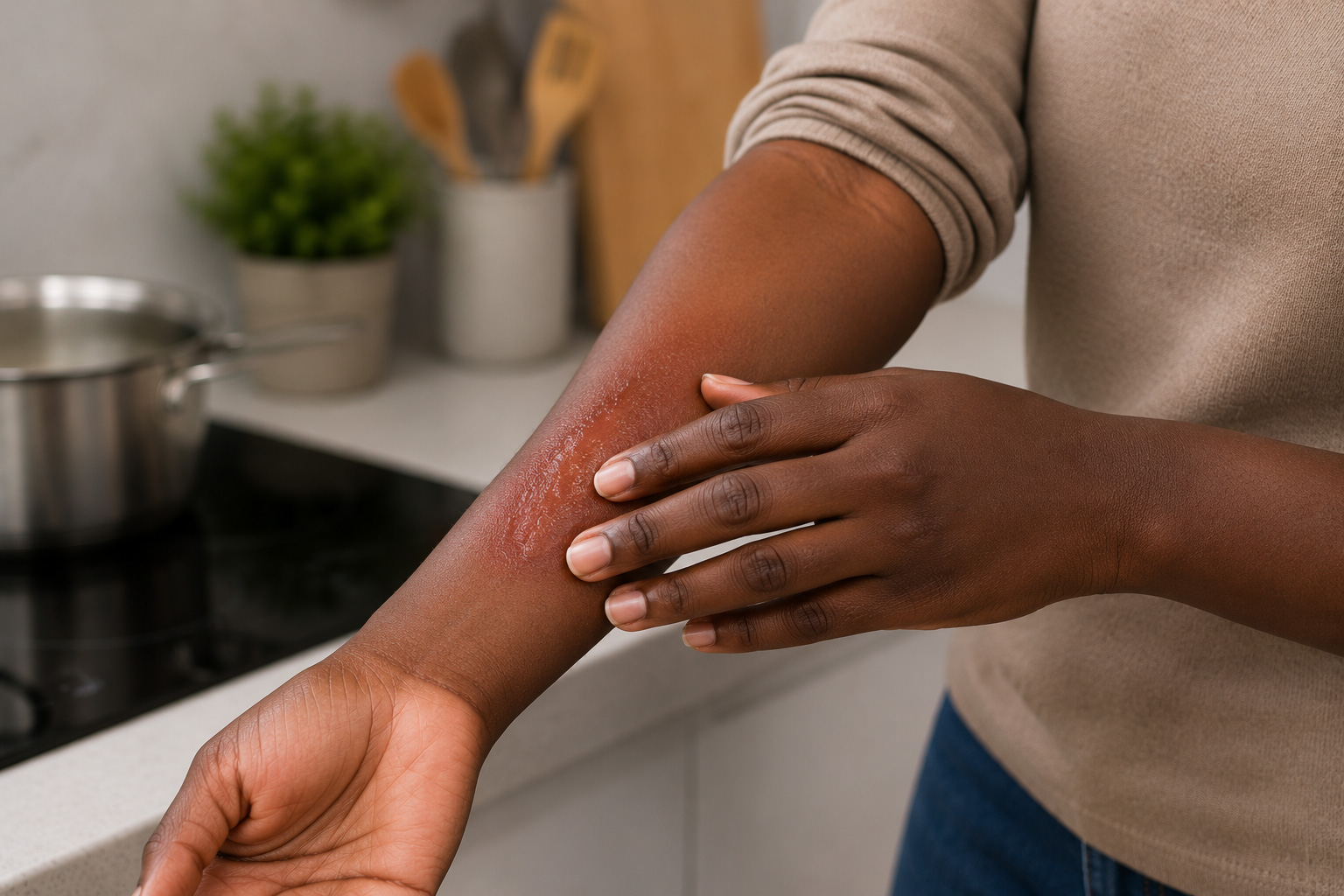
Second-degree burns affect deeper layers of skin. Symptoms may include: • Blistering • Significant pain • Red or blotchy skin • Swelling • Moist or shiny appearance These burns may require medical assessment depending on size and location.
Third-Degree Burns
Third-degree burns are severe and damage multiple layers of skin and underlying tissue. Symptoms may include: • White, black or charred skin • Leathery appearance • Loss of sensation • Severe tissue damage Third-degree burns require urgent medical treatment.
What To Do Immediately After a Burn
The first few minutes after a burn are important. Correct first aid may reduce damage and improve healing.
Cool the Burn
Place the affected area under cool running water for approximately 20 minutes. Cool water helps reduce heat within the skin and may limit further damage. The water should be cool rather than icy.
Remove Tight Items
If safe to do so, remove jewellery, watches or tight clothing near the burn before swelling develops. Do not remove anything stuck to the skin.
Protect the Burn
Cover the burn loosely with a clean, non-stick dressing or sterile gauze. This may help protect the area from contamination and reduce discomfort.
Common Burn First Aid Mistakes
Despite good intentions, some traditional home remedies may actually worsen burn injuries. Avoid the following: • Applying butter or oils • Using toothpaste • Placing ice directly on the skin • Breaking blisters • Applying unknown creams or chemicals Ice may further damage tissue and home remedies may increase infection risk or interfere with medical treatment. When in doubt, keep burn care simple and seek professional guidance.
When Burns Need Medical Attention
While many minor burns improve at home, some situations require medical advice or urgent care. Seek medical attention if: • The burn is larger than the palm of your hand • Blisters are extensive • The burn involves the face, hands, feet or genitals • There are signs of infection • Pain is severe or worsening • The burn results from electricity or chemicals • Skin appears white, black or deeply damaged • The injured person is very young or elderly Prompt treatment may help prevent complications such as infection, scarring and delayed healing.
Preventing Burns at Home
Many burn injuries are preventable through simple safety measures. Consider these practical precautions: • Turn pot handles inward while cooking • Keep hot drinks away from children • Test bath water before use • Keep electrical cords in good condition • Store chemicals safely • Use caution with heaters and candles • Apply sunscreen and avoid excessive sun exposure Creating safer home environments helps reduce risk for the entire family.
Burns and Children
Children are naturally curious and may not recognise danger. Burn injuries in children often occur through: • Pulling hot drinks or kettles • Touching ovens or stovetops • Bath water that is too hot • Contact with irons or heated tools Close supervision and child-safe home practices remain essential. Parents should also be familiar with basic burn first aid so they can respond calmly and effectively if accidents occur.
Healing and Recovery
Even mild burns need time and care to heal. During recovery: • Keep the area clean • Avoid unnecessary friction • Protect healing skin from sun exposure • Follow medical guidance if prescribed treatment is required Healing time varies depending on burn severity and individual skin response. Scarring risk may increase if burns are severe or if wounds become infected.
When to Speak to a Healthcare Professional
Burn injuries can sometimes appear minor at first but worsen over time. If you are unsure about the severity of a burn or concerned about healing, medical advice can provide reassurance and guidance. Telemedicine offers a convenient way to speak with a healthcare professional, discuss symptoms and determine whether in-person care is needed.
Protecting Your Family Starts With Awareness
Burns happen quickly, but informed action can make a meaningful difference. Understanding common risks, using appropriate first aid and recognising when to seek help can support faster recovery and reduce complications. Simple safety habits and early medical advice remain some of the best tools for protecting your family’s health.
Speak to a Healthcare Professional
If you or a loved one has experienced a burn injury and need guidance, TruMD makes it easier to connect with qualified healthcare professionals from the comfort of your home. Book your consultation online and receive trusted medical support when you need it most.