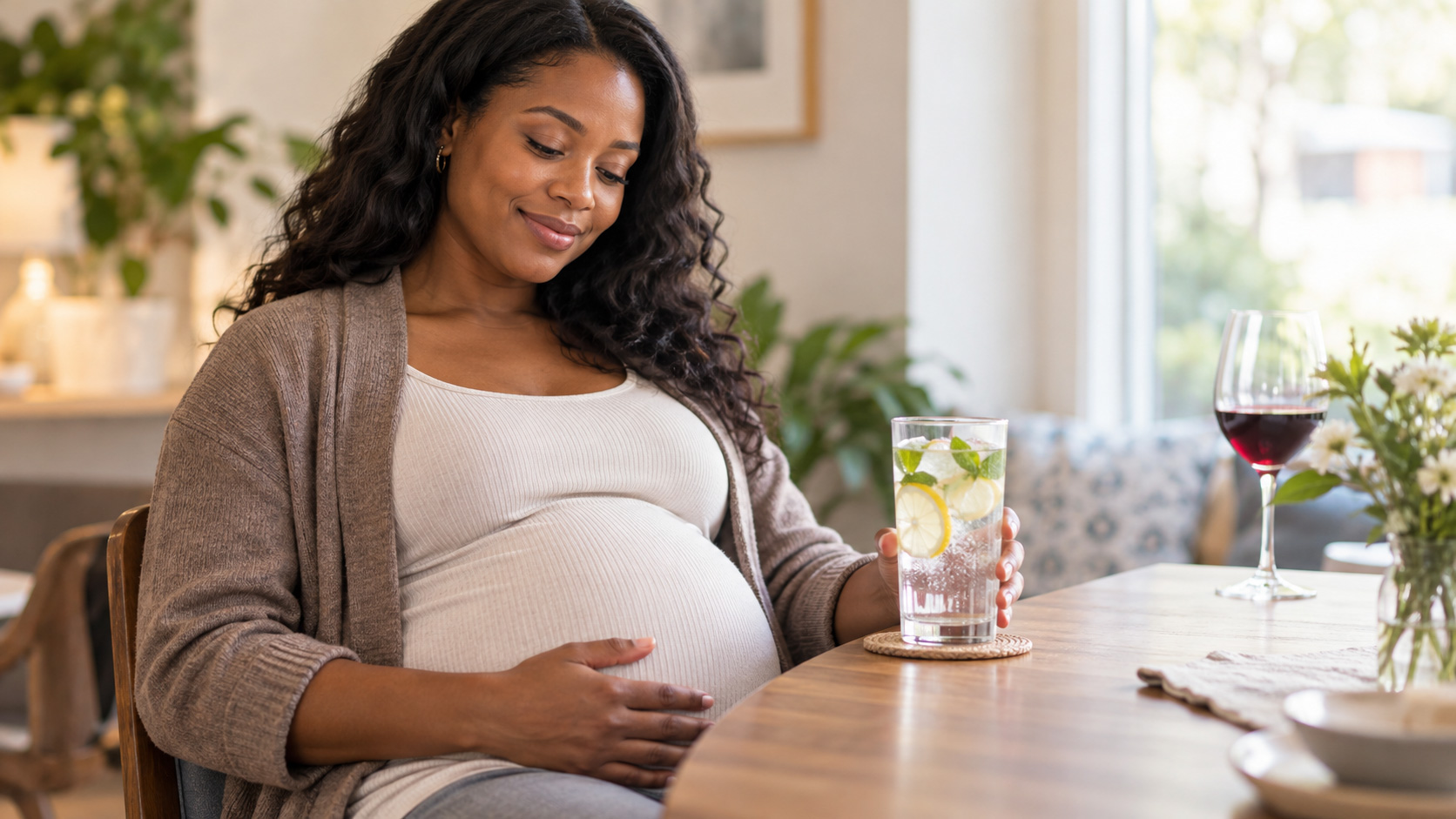
Pregnancy and Alcohol: Why No Amount Is Considered Safe
Pregnancy often comes with a long list of questions about what you should eat, drink and avoid.
One question that continues to cause confusion is alcohol.
Is one glass of wine okay? What if you drank before you realised you were pregnant? Is beer safer than spirits?
For International Foetal Alcohol Syndrome Day on 9 September, it is worth clearing up one important message: there is no known safe amount of alcohol to drink during pregnancy.
Understanding why can help expectant parents make informed choices without fear, blame or judgement.
What happens when you drink alcohol during pregnancy?
When a pregnant woman drinks alcohol, alcohol passes through the bloodstream and can also reach the developing baby through the placenta.
A developing baby’s body cannot process alcohol in the same way an adult body can.
Because the baby’s brain, organs and nervous system are developing throughout pregnancy, alcohol exposure may interfere with this development.
The effects can vary significantly from one pregnancy to another, which is one of the reasons healthcare professionals cannot identify a specific amount of alcohol that can be guaranteed to be safe.
What are Foetal Alcohol Spectrum Disorders?
Foetal Alcohol Spectrum Disorders, or FASDs, is an umbrella term used for a range of lifelong effects that can occur following alcohol exposure before birth.
These effects differ from person to person and can range from mild to severe.
They may include difficulties with:
- Learning and memory
- Attention and concentration
- Speech and language
- Behaviour and impulse control
- Reasoning and judgement
- Coordination
- Social skills
- School performance
Some individuals may also experience physical growth problems, vision or hearing difficulties and other health concerns.
Foetal Alcohol Syndrome (FAS) is one diagnosis within the wider foetal alcohol spectrum and may involve a particular combination of developmental, neurological and physical features.
Is a small amount of alcohol safe?
You may have heard advice suggesting that an occasional glass of wine during pregnancy is harmless.
The difficulty is that researchers have not been able to establish an amount of alcohol that can reliably be considered safe for every pregnancy.
Not every baby exposed to alcohol will develop an FASD, and the effects of alcohol exposure can differ considerably.
However, it is impossible to predict which pregnancies will be affected.
For this reason, the safest recommendation during pregnancy is to avoid alcohol completely.
Wine, beer or spirits — does the type matter?
No type of alcoholic drink is considered safer during pregnancy.
Wine, beer, cider, spirits and alcoholic cocktails all contain alcohol.
It is the alcohol itself — rather than the particular drink it comes in — that creates the potential risk to a developing baby.
Is there a safer stage of pregnancy to drink?
There is no known safe time during pregnancy to drink alcohol.
The baby’s brain develops throughout pregnancy, meaning alcohol exposure can potentially affect development at different stages.
It is also possible to be exposed to alcohol very early in pregnancy before you even know that you are pregnant.
This is why avoiding alcohol is also recommended when you are actively trying to become pregnant.
What if I drank before I knew I was pregnant?
This is an extremely common concern.
Finding out that you are pregnant and then remembering drinks you had during the first few weeks can be frightening, but panicking or blaming yourself will not help.
Stop drinking alcohol once you know that you are pregnant and discuss any concerns with your healthcare professional.
Stopping alcohol use at any point during pregnancy is beneficial. Continuing with appropriate antenatal care is also important.
Your healthcare professional can discuss your individual circumstances with you and advise whether any additional monitoring is necessary.
What if stopping alcohol isn’t easy?
For some people, simply deciding not to drink is relatively straightforward.
For others, alcohol use may be more complicated.
If you are pregnant and finding it difficult to stop drinking, tell a healthcare professional.
Alcohol dependence is a health issue, not something that should prevent you from seeking care. Getting professional support as early as possible can benefit both you and your pregnancy.
Depending on your situation, your healthcare provider can help you access appropriate support and treatment.
If you regularly consume large amounts of alcohol, it is particularly important to seek medical guidance rather than trying to manage the situation entirely on your own.
Partners, families and friends can help too
Alcohol-free pregnancies are easier when the people around an expectant mother are supportive.
Partners, friends and family members can help by:
- Offering alcohol-free options at social gatherings
- Not pressuring someone to “just have one”
- Avoiding judgement if someone discusses difficulties with alcohol
- Supporting healthy lifestyle changes
- Encouraging early and regular antenatal care
Pregnancy health is not something that an expectant mother has to navigate alone.
Prevention starts with accurate information
FASDs caused by prenatal alcohol exposure can have lifelong effects.
The prevention message is therefore simple:
If you are pregnant or trying to become pregnant, the safest option is not to drink alcohol.
And if alcohol has already been consumed during pregnancy, stopping now still matters.
There is no benefit in shame or fear. What matters is taking the healthiest steps possible from this point forward.
Speak to a TruMD healthcare professional
If you have questions about alcohol during pregnancy, early pregnancy, medication, nutrition or other pregnancy-related concerns, TruMD gives you convenient access to qualified healthcare professionals online.
You can discuss your situation confidentially and receive guidance on the appropriate next steps.
Where additional antenatal care, testing or an in-person examination is required, your healthcare professional can advise you accordingly.
Healthy pregnancies start with informed choices and the right support.
Speak to a TruMD healthcare professional whenever you need trusted medical guidance.