Choosing Contraception: Understanding Your Options and What May Suit You
Choosing contraception can feel overwhelming.
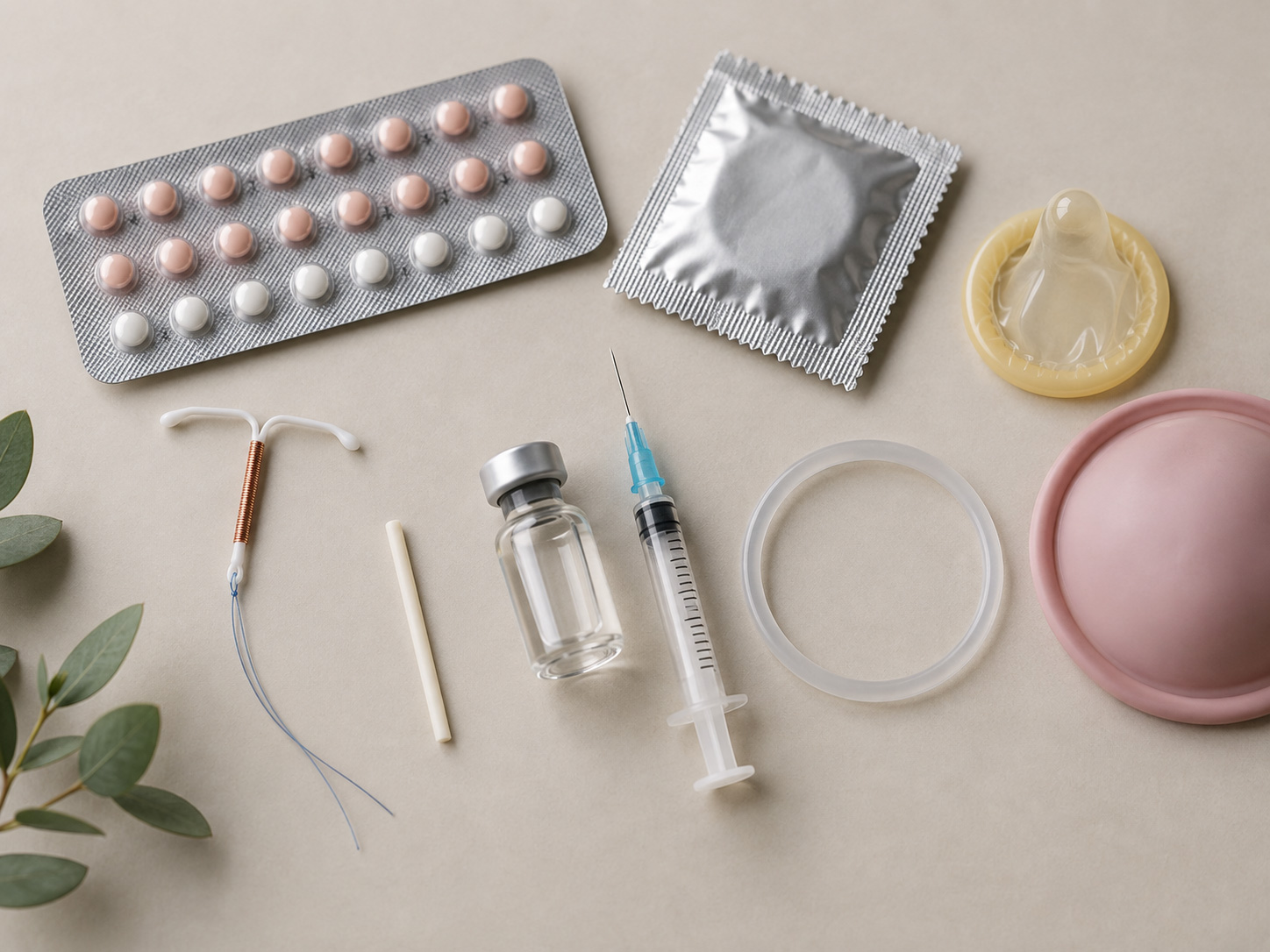
There are pills, injections, implants, intrauterine devices, condoms and permanent options — and what works well for one person may not be the right choice for another.
For World Contraception Day on 26 September, we look at the different contraceptive methods available, what to consider when choosing one and why the best method is usually the one that suits your health, lifestyle and reproductive plans.
Why contraception is not one-size-fits-all
There is no single contraceptive method that is best for everyone.
The right option can depend on several factors, including:
- Your age
- Your general health
- Whether you smoke
- Other medication you take
- How often you want to think about contraception
- Whether you want children in the future
- How soon you may want to become pregnant
- Your menstrual symptoms
- Your risk of sexually transmitted infections
- Your personal preferences
WHO notes that a wide range of temporary and permanent contraceptive methods are available and that the most appropriate choice depends on an individual’s health, preferences and needs.
Condoms
Condoms are a barrier method used during sexual intercourse.
One important difference between condoms and most other contraceptive methods is that condoms can help protect against sexually transmitted infections, including HIV, as well as pregnancy.
For this reason, condoms may still be recommended even when another contraceptive method — such as the pill, implant or injection — is being used.
Using condoms together with another reliable contraceptive method is sometimes referred to as dual protection.
The contraceptive pill
Oral contraceptive pills are taken regularly to prevent pregnancy.
There are two main categories:
- Combined oral contraceptives, which contain both oestrogen and a progestogen
- Progestogen-only pills, sometimes called the mini-pill
The pill can be a convenient option for people who are comfortable remembering medication regularly.
Depending on the specific pill and the individual using it, hormonal contraception may also help with menstrual symptoms such as heavy or painful periods.
However, some contraceptive pills are not suitable for everyone.
Your healthcare professional may ask about factors such as smoking, migraines, blood pressure, previous blood clots and other medical conditions before recommending a particular option.
WHO notes that fertility generally returns quickly after oral contraceptives are stopped.
Contraceptive injections
Hormonal contraceptive injections are another option.
Depending on the product used, an injection may provide contraception for several weeks or months before another dose is required.
This can be useful for someone who does not want to remember a tablet every day.
However, it is important to return for injections according to the recommended schedule.
Possible side effects may include changes in menstrual bleeding, and some injectable contraceptives can result in a delay before fertility fully returns after stopping.
A healthcare professional can explain the advantages and disadvantages of the particular injection being considered.
The contraceptive implant
A contraceptive implant is a small flexible rod placed beneath the skin of the upper arm by a trained healthcare professional.
It slowly releases a hormone and can provide long-lasting contraception without requiring you to remember something every day.
Implants are considered among the most effective reversible contraceptive methods.
For some people, the convenience of having contraception that works continuously for several years is a major advantage.
Changes in menstrual bleeding are one of the more common reasons people seek advice while using an implant, so it is helpful to discuss what you may expect before choosing this method.
Intrauterine devices
An intrauterine device, or IUD, is placed inside the uterus by a trained healthcare professional.
Different types are available, including hormonal intrauterine systems and copper-containing devices.
IUDs can provide highly effective, long-term contraception and are reversible.
A major advantage is that, once inserted, there is very little to remember on a daily basis.
Some types may also reduce menstrual bleeding, while copper IUDs contain no hormones.
The most appropriate option depends on your health, menstrual pattern and preferences.
Permanent contraception
Permanent contraceptive options include procedures such as tubal sterilisation and vasectomy.
These methods are intended for people who are confident that they do not want biological children in the future.
Because they are designed to be permanent, the decision requires careful consideration and appropriate counselling.
WHO lists both vasectomy and female sterilisation as permanent contraceptive options.
What is emergency contraception?
Emergency contraception can be used after unprotected sexual intercourse or when a contraceptive method may have failed.
Examples include:
- A condom breaking or slipping
- Missing contraceptive pills
- Having sex without contraception
- Sexual assault where effective contraception was not in place
Emergency contraception works by preventing pregnancy before it becomes established.
It does not terminate an existing pregnancy.
Emergency contraceptive pills
Emergency contraceptive pills are most effective when taken as soon as possible after unprotected intercourse.
Depending on the medication used, they can be used within a period of up to five days after unprotected sex, although earlier use is generally preferable.
Emergency contraception should not automatically become someone’s main contraceptive strategy when other suitable ongoing options are available.
If you find yourself relying on it frequently, consider speaking to a healthcare professional about a regular method that may work better for you.
The copper IUD as emergency contraception
A copper-containing IUD can also be used as emergency contraception when inserted within the appropriate time period after unprotected intercourse.
WHO describes the copper IUD as the most effective form of emergency contraception, with effectiveness above 99% when inserted within 120 hours of unprotected sex.
It can then remain in place as an ongoing contraceptive method if appropriate.
Does contraception affect future fertility?
One common concern is that using contraception will permanently affect someone’s ability to become pregnant later.
For most reversible contraceptive methods, this is not the case.
Fertility generally returns after contraception is discontinued, although the timing varies depending on the method.
For example, WHO notes that fertility returns quickly after stopping oral contraceptives.
If you are planning a pregnancy in the near future, discussing this with your healthcare provider can help guide your choice of contraception.
Side effects are worth discussing
Hormonal contraception can cause side effects, particularly when first starting a method.
These may include:
- Changes in menstrual bleeding
- Breast tenderness
- Headaches
- Nausea
- Mood changes
The pattern differs between methods and between individuals.
If you experience side effects, you do not necessarily have to simply tolerate them.
Sometimes another contraceptive method may suit you better.
Seek urgent medical attention for severe or unusual symptoms, particularly sudden chest pain, severe shortness of breath, significant leg swelling, severe neurological symptoms or other rapidly developing concerns.
Don’t choose contraception based only on someone else’s experience
A friend may love her implant.
Another person may dislike the pill.
Someone else may have had an excellent experience with an IUD.
These experiences can be useful to hear, but they do not determine how your body will respond.
Your own health history and preferences matter.
It is also worth being cautious about contraception advice from social media, particularly claims that a particular method is universally dangerous or completely free of risk.
Every medication and contraceptive method has potential benefits and drawbacks.
The goal is to weigh those factors for you.
What should you ask your healthcare professional?
If you are considering starting or changing contraception, useful questions include:
- How effective is this method?
- How often do I need to use or replace it?
- What side effects are common?
- Could it affect my periods?
- Is it appropriate with my medical history?
- Will it interact with any medication I use?
- How quickly will fertility return after stopping?
- Do I still need condoms?
- What should I do if I miss a dose or appointment?
Having this conversation can make choosing contraception much easier.
The best method is one you can use confidently
Contraception is not simply about preventing pregnancy.
It is about finding a method that fits comfortably into your life and gives you appropriate control over your reproductive choices.
For some people, that means a daily pill.
For others, it means an implant or IUD that requires very little ongoing thought.
And for people who also need protection against sexually transmitted infections, condoms remain important regardless of the other contraceptive method being used.
Speak to a TruMD healthcare professional
If you are unsure which contraceptive method may suit you, want to change your current contraception or need advice after unprotected intercourse, TruMD gives you convenient access to qualified healthcare professionals online.
You can discuss your health history, lifestyle, preferences and concerns confidentially.
Where an examination, contraceptive procedure or in-person consultation is necessary, your healthcare professional can guide you towards the appropriate next step.
The right contraception is a personal decision — and good information makes that decision easier.
Speak to a TruMD healthcare professional if you need guidance choosing an option that works for you.